
Incretin Therapy and Healthspan: Where Microdosing Sits
The outcome trials are among the strongest cardiometabolic evidence of the decade. They tested full doses in people with established disease. Neither of those facts supports what is currently being marketed.
Patients ask about this almost weekly now, and the question usually arrives in a particular form: could a small dose of one of the incretin drugs slow ageing, even in someone who does not need to lose weight?
It is a reasonable question. The biology behind it is not silly. But the honest answer requires separating three things that are routinely conflated: what these drugs have been proven to do, what is biologically plausible but untested, and what is currently being marketed.
Key takeaways
- The outcome trials are genuinely strong, but every one enrolled people with established disease or elevated risk, and every one used full titrated therapeutic doses.
- No randomised controlled trial has tested sub-therapeutic dosing for longevity endpoints, and there is not even an agreed definition of what the term means.
- The lowest approved dose exists for tolerability during titration. It was never validated as a maintenance dose delivering therapeutic effect.
- A meaningful proportion of weight lost is lean tissue. In a lean, metabolically healthy adult, that works directly against the longevity objective.
- Where these drugs are clinically indicated, resistance training and protein intake are not adjuncts. They are the mechanism by which lean mass is defended.
- Diet genuinely raises endogenous secretion, at a magnitude far smaller than pharmacological receptor agonism. For a metabolically healthy person asking how to support this pathway, that is the appropriate answer rather than a consolation prize.
Why longevity medicine is interested at all
Glucagon-like peptide-1 is an incretin hormone released from intestinal L-cells in response to food. It stimulates glucose-dependent insulin secretion, suppresses glucagon, slows gastric emptying and reduces appetite through central pathways in the hypothalamus and brainstem.
The drug class comprises engineered peptides that activate this receptor with a much longer half-life than the native hormone. Dual agonists add a second incretin receptor target.
The interest for healthspan does not rest primarily on weight. Receptors are expressed in cardiac tissue, vascular endothelium, kidney and the central nervous system, and receptor activation has documented effects on inflammatory signalling, endothelial function and renal haemodynamics that appear only partly explained by weight change. That is the mechanistic argument, and it is the reason the ageing biology literature has taken an interest.
The review you may have encountered, Chavda and colleagues in Maturitas in 2024, sits in exactly this space. It is a narrative review examining the biology in the context of ageing. It is worth reading for the mechanistic framing. It is also important to be clear about what a narrative review is: a synthesis of hypotheses and existing literature, not a source of new clinical evidence, and not a trial of any dosing strategy.
The outcome evidence that genuinely exists
This is the strongest part of the picture, and it is strong.
SELECT randomised over 17,000 adults with overweight or obesity and established cardiovascular disease, but without diabetes, to weekly therapy or placebo. It demonstrated a significant reduction in major adverse cardiovascular events. This was a landmark result because it established cardiovascular benefit in a non-diabetic population.
FLOW examined kidney outcomes in people with type 2 diabetes and chronic kidney disease and was stopped early for efficacy, showing reduced progression of kidney disease and cardiovascular death.
Heart failure with preserved ejection fraction, obstructive sleep apnoea and metabolic liver disease have each produced positive trials, and regulatory indications have followed in several jurisdictions.
Taken together, this is one of the most consequential bodies of cardiometabolic trial evidence in recent memory. If the question is whether these drugs can extend healthy life in the right patient, the answer is plausibly yes, and the trials pointing that way are real.
Two features of that evidence base are decisive for what follows.
Every one of those trials enrolled people with established disease or elevated risk. Overweight or obesity plus cardiovascular disease. Diabetes plus kidney disease. Heart failure. Sleep apnoea. None enrolled metabolically healthy adults with normal body composition.
Every one used full titrated therapeutic doses. The benefit was demonstrated at those doses, not below them.
What microdosing is, and what is known about it
Microdosing refers to using doses substantially below the lowest approved dose. The intended rationale is to capture metabolic and anti-inflammatory effects while avoiding nausea, rapid weight loss, muscle loss and cost.
The state of the evidence needs to be stated plainly, because the marketing around this is now considerable.
There is no randomised controlled trial of microdosing for longevity endpoints. Reporting in STAT in 2026 documented that clinicians and researchers find no robust clinical evidence that these drugs are effective at small doses, and that no legitimate long-term data support the practice for weight loss or any other indication. One health services researcher quoted described patients using them this way as being, in effect, experimental subjects on both the efficacy and the safety side.
There is not even an agreed definition. As the same reporting notes, no single definition of a microdose exists, which means two clinics using the word may be describing quite different regimens.
Specialist bodies are explicit. The director of obesity medicine at Cedars-Sinai has stated that microdosing is not a medical term but one popularised on social media, that there is no evidence low-dose or intermittent use delivers meaningful sustained weight loss or broader health benefits, and that the risks of inappropriate use are the greater concern.
Use in metabolically healthy adults is the least studied application of all. Commentary in this area characterises low-dose use by healthy adults for longevity, inflammation or cognitive performance as off-label and largely unstudied, noting that almost everything known about these drugs derives from trials at standard therapeutic doses.
The practice is nonetheless widespread. Survey data reported by Science News suggests roughly one in seven users has microdosed, some to reduce cost, others specifically hoping to gain health and lifespan benefits without significant weight loss.
Research is beginning. Prospective cohort studies with microdosing and longevity among their stated outcomes have been registered, including observational work in the region of two thousand participants. Observational cohorts of this kind can generate useful signals. They cannot establish causal benefit, and they are not equivalent to the randomised evidence that supports full-dose use in defined populations.
The assumption that deserves scrutiny
The appeal of microdosing rests on an implicit premise: that a low dose retains most of the benefit while shedding most of the risk.
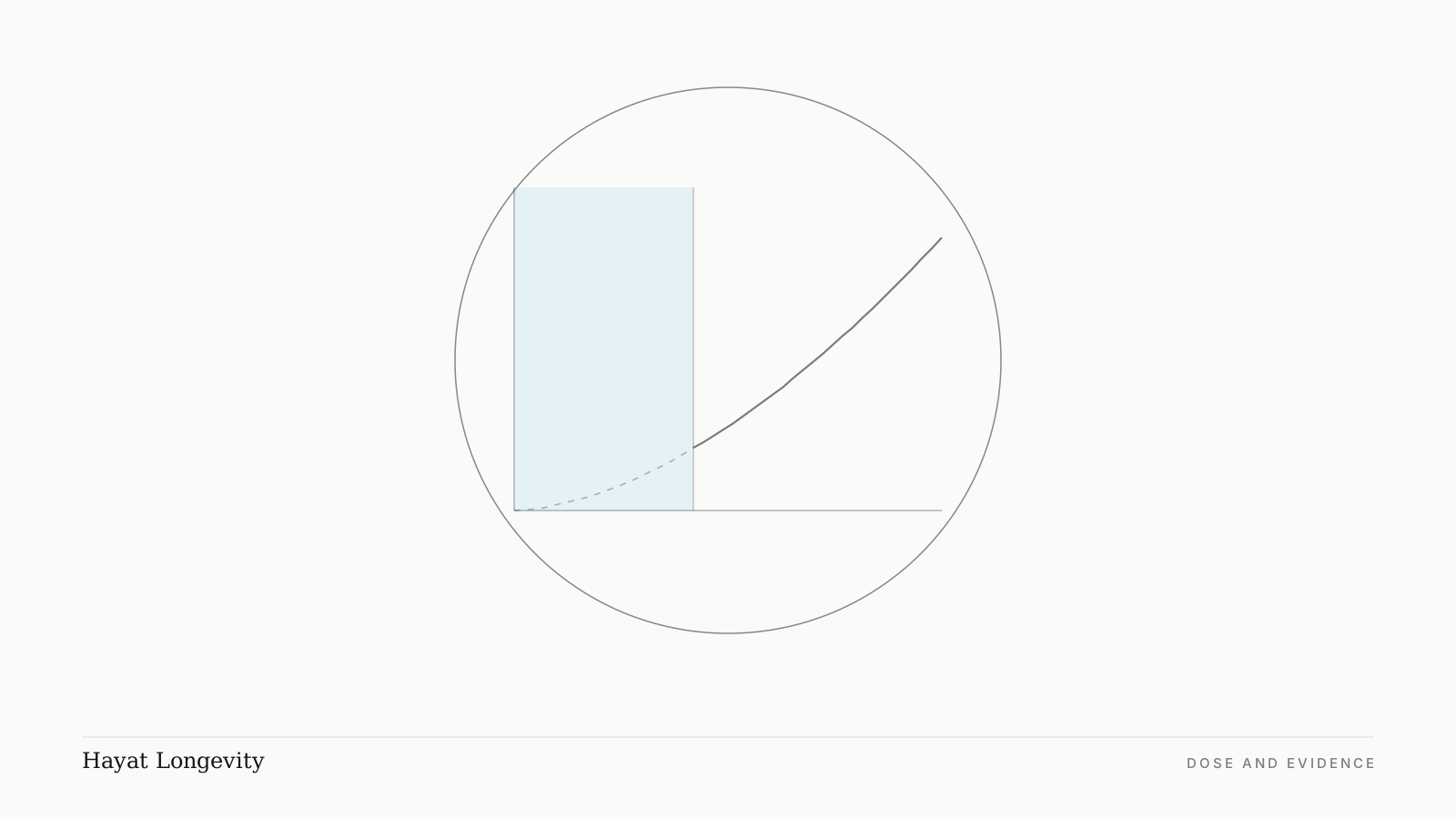
These effects are dose-responsive. Across the trial programme, larger doses produced larger effects on weight, glycaemia and, where measured, outcomes. There is no established plateau at sub-therapeutic doses at which benefit is preserved and adverse effects disappear.
It is also worth understanding what the approved starting dose actually is. It exists for tolerability, to allow gradual adaptation during titration. It was never designed or validated as a maintenance dose delivering therapeutic effect.
So the more accurate framing of microdosing is not benefit without risk. It is an untested trade of unknown proportions, in which the reduction in adverse effects is real and the retention of benefit is assumed.
Risks that deserve particular attention outside the trial populations
Several risks are well recognised in obesity and diabetes practice. Two of them change character when the drug is used in a metabolically healthy person.
Lean mass and bone
A meaningful proportion of the weight lost on this therapy is lean tissue. In a patient with substantial excess adiposity, this is an acceptable trade because the metabolic gain is large and body composition improves overall.
In a lean, metabolically healthy adult taking the drug for longevity, that calculus inverts. Skeletal muscle mass and strength are among the most robust predictors of function and mortality in later life. Losing lean tissue in pursuit of longevity is working directly against the objective. Bone mineral density warrants the same consideration, particularly in postmenopausal women.
This is the single strongest clinical argument against casual use in people who are not carrying excess fat mass, and in my view it is underweighted in most of the marketing. Our article on protein and muscle after 40 sets out why muscle is the tissue to defend in this decade.
Gastrointestinal effects
Nausea, vomiting, constipation and diarrhoea are common and dose-related. More serious presentations occur. A recent case report described subocclusive ileus in a 37-year-old woman with a normal body mass index following unsupervised use, which illustrates the point that low body weight and absence of a clinical indication do not confer immunity.
Also documented: pancreatitis, gallbladder disease including cholelithiasis associated with rapid weight loss, and delayed gastric emptying with implications for anaesthesia that anaesthetists now routinely ask about before surgery.
Nutritional adequacy
Appetite suppression reduces total intake, which reduces protein, calcium, iron and micronutrient intake alongside energy. In a patient who was already eating adequately, this can create deficiency where none existed.
Product provenance
Compounded and grey-market preparations are widespread in this drug class, and dose accuracy in such products cannot be assumed. Any use should involve a registered pharmaceutical product obtained through a legitimate supply chain, prescribed by a doctor who has assessed the patient.
Contraindications and cautions
Personal or family history of medullary thyroid carcinoma or multiple endocrine neoplasia type 2, prior pancreatitis, active gallbladder disease, severe gastroparesis, pregnancy and breastfeeding, and a history of disordered eating, which warrants particular care given the mechanism of action.
Assessment before treatment
Where this therapy is clinically appropriate, the assessment establishes the indication, excludes contraindications and creates the baseline for monitoring.
Clinical and anthropometric
- Full history including gastrointestinal, pancreatic, biliary and thyroid history, and family history of medullary thyroid carcinoma or MEN2
- Screening for disordered eating history
- Medication review, with attention to insulin and sulfonylureas where relevant
- Weight, waist circumference, blood pressure
- Body composition analysis with lean mass quantified, not weight alone, and repeated during treatment
Laboratory
- HbA1c and fasting glucose
- Fasting lipid profile
- Liver function tests, with fibrosis assessment where metabolic liver disease is suspected
- Renal function
- Full blood count
- Thyroid function
- Vitamin D, B12, ferritin and iron studies as a nutritional baseline
- Pancreatic enzymes where history warrants it
Functional
- Grip strength and a measure of lower limb function, since these track the outcome that matters most and are almost never recorded in commercial programmes
If assessment finds no metabolic indication, that is a legitimate and useful result. It means the intervention with the best evidence for this patient is something other than a prescription.
Monitoring during treatment
- Review at four to six weeks for tolerance, gastrointestinal symptoms and intake adequacy
- Body composition repeated at three and six months, with lean mass as an explicit endpoint. A protocol that tracks only total weight is not adequate for a longevity indication
- HbA1c, lipids, liver and renal function at intervals appropriate to the indication
- Protein intake and training adherence reviewed at every visit
- Any severe or persistent abdominal pain investigated promptly rather than attributed to expected side effects
- Documented reassessment of whether continuation remains justified, rather than indefinite repeat prescribing
Nutrition and training are not optional adjuncts here
For this drug class more than most, what happens outside the prescription determines whether the outcome is good.
Protein and resistance training
These are the countermeasure to the principal risk. Reduced energy intake without a resistance training stimulus and adequate protein produces preferential loss of lean tissue.
Resistance training two to three times weekly, progressively loaded, is not a lifestyle suggestion in this context. It is the mechanism by which lean mass is defended. Protein intake should be deliberately maintained and distributed across meals, which requires planning precisely because appetite is suppressed. Many patients on these drugs find protein the hardest macronutrient to consume, and it is the one that matters most.
Nutrient density under reduced intake
When total intake falls, every meal has to carry more nutritional weight. Priorities are protein, calcium, vitamin D, iron, B12 and fibre. Hydration and adequate fibre also mitigate the constipation that commonly accompanies slowed gastric emptying.
Endogenous secretion
Native GLP-1 release is stimulated by dietary protein, fat, fermentable fibre and the short-chain fatty acids produced by gut bacteria fermenting that fibre. Food-based approaches, high-fibre and adequate-protein eating, legumes, whole grains, vegetables and fermented foods, do increase endogenous secretion.
It is important not to overstate this. The magnitude of physiological release is far smaller and shorter-lived than pharmacological receptor agonism. Diet is not a substitute for the drug in a patient who has a clear indication for it. What it does represent is a genuine and evidence-supported approach for someone metabolically healthy who is asking how to support this pathway, and for that person it is the appropriate answer rather than a consolation prize.
Sleep, alcohol and activity
Sleep restriction impairs insulin sensitivity and appetite regulation. Alcohol contributes energy without nutrition, which matters more under restricted intake. Daily non-exercise activity remains one of the most reliable contributors to metabolic health independent of any medication.
How we approach this at Hayat Longevity
Our position follows from the evidence above.
We assess first. A structured metabolic assessment, including body composition with lean mass quantified and functional strength measurement, establishes whether there is a clinical indication for pharmacological therapy. That assessment has value regardless of the outcome, because it also identifies the insulin resistance, hepatic steatosis, hypertension and nutritional gaps that are treatable by other means.
Where this class of therapy is clinically indicated, we prescribe registered pharmaceutical products, at doses supported by the evidence for that indication, with the monitoring schedule set out above, and with the nutrition and resistance training programme built in from the start rather than added later.
Where it is not indicated, we say so. We do not offer sub-therapeutic dosing as a longevity intervention, because the randomised evidence supporting it does not currently exist, and because in a lean patient the lean mass consideration argues against it. If that evidence emerges from the trials now under way, our position will change with it. That is how it should work.
Where to begin
If you want to understand your metabolic and body composition status, and what the evidence supports for your particular situation, that is the right place to start, and it is a different question from which drug to take.
Our pre-consultation questionnaire covers your history and current health, and gives the clinical team what they need before a structured metabolic and body composition assessment. If you would like the wider context first, our articles on visceral fat and what standard medical checkups miss cover what that assessment is looking for.
Written by Dr. Daniel Chong, Human Performance and Longevity. Hayat Longevity, Penang.
This article is for general information and does not replace individual medical advice. The medicines discussed are prescription-only, carry significant contraindications and adverse effects, and require assessment, prescription and monitoring by a doctor familiar with your full medical history. Do not obtain or use these medicines without medical supervision. Specific products and dosing are deliberately not detailed here and are a matter for consultation.
Frequently asked questions
Can these drugs extend healthy lifespan?
Plausibly, in the right patient. The outcome trials showed significant reductions in major adverse cardiovascular events and in the progression of kidney disease, with positive trials in heart failure, sleep apnoea and metabolic liver disease. Every one of those trials enrolled people with established disease or elevated risk, and every one used full therapeutic doses. Extending that evidence to metabolically healthy adults at low doses is an assumption, not a finding.
Is microdosing supported by evidence?
No randomised controlled trial has tested it for longevity endpoints, and there is no agreed definition of what the term means. Specialists have described it as a social media term rather than a medical one. Observational cohorts are now under way and may generate useful signals, but they cannot establish causal benefit.
Is a low dose safer than a full dose?
The reduction in adverse effects is real. The retention of benefit is assumed. These effects are dose-responsive across the trial programme, with no established plateau at which benefit persists and side effects disappear. The lowest approved dose exists to allow gradual adaptation during titration; it was never validated as a maintenance dose.
Why is lean mass the main concern for healthy adults?
A meaningful proportion of weight lost on this therapy is lean tissue. In someone carrying substantial excess fat, that is an acceptable trade. In a lean, metabolically healthy adult taking it for longevity, muscle mass and strength are among the strongest predictors of later-life function and mortality, so losing lean tissue works directly against the objective.
Can diet raise GLP-1 naturally?
Yes, and it is worth doing. Dietary protein, fat, fermentable fibre and the short-chain fatty acids produced by gut bacteria all stimulate native secretion. The magnitude is far smaller and shorter-lived than pharmacological receptor agonism, so it is not a substitute where there is a clear clinical indication. For a metabolically healthy person asking how to support this pathway, it is the appropriate answer.
Does Hayat Longevity offer microdosing?
No. We do not offer sub-therapeutic dosing as a longevity intervention, because the randomised evidence supporting it does not exist and because in a lean patient the lean mass consideration argues against it. Where this class of therapy is clinically indicated, we prescribe registered products at evidence-supported doses with structured monitoring. If the evidence changes, our position will change with it.
References
- Chavda VP, Balar PC, Vaghela DA, Dodiya P. Unlocking longevity with GLP-1: a key to turn back the clock? Maturitas, 2024;186:108028.
- Lincoff AM, et al. Semaglutide and cardiovascular outcomes in obesity without diabetes (SELECT). New England Journal of Medicine, 2023.
- Perkovic V, et al. Effects of semaglutide on chronic kidney disease in patients with type 2 diabetes (FLOW). New England Journal of Medicine, 2024.
- STAT. GLP-1 microdosing is popular, but there's little evidence it works. 29 May 2026.
- STAT. Microdosing aims to extend the lifespan of the GLP-1 compounding market. 4 November 2025.
- Cedars-Sinai. Can microdosing GLP-1s promote health and weight loss? Expert advice, 2026.
- Science News. GLP-1 microdosers are chasing longevity. 20 March 2026.
- Nikolaeva A, Vandeputte M. Subocclusive ileus following off-label use. Endocrinology, Diabetes and Metabolism Case Reports, 2025.