
Your Gut Microbiome Test: What It Shows, and What It Cannot
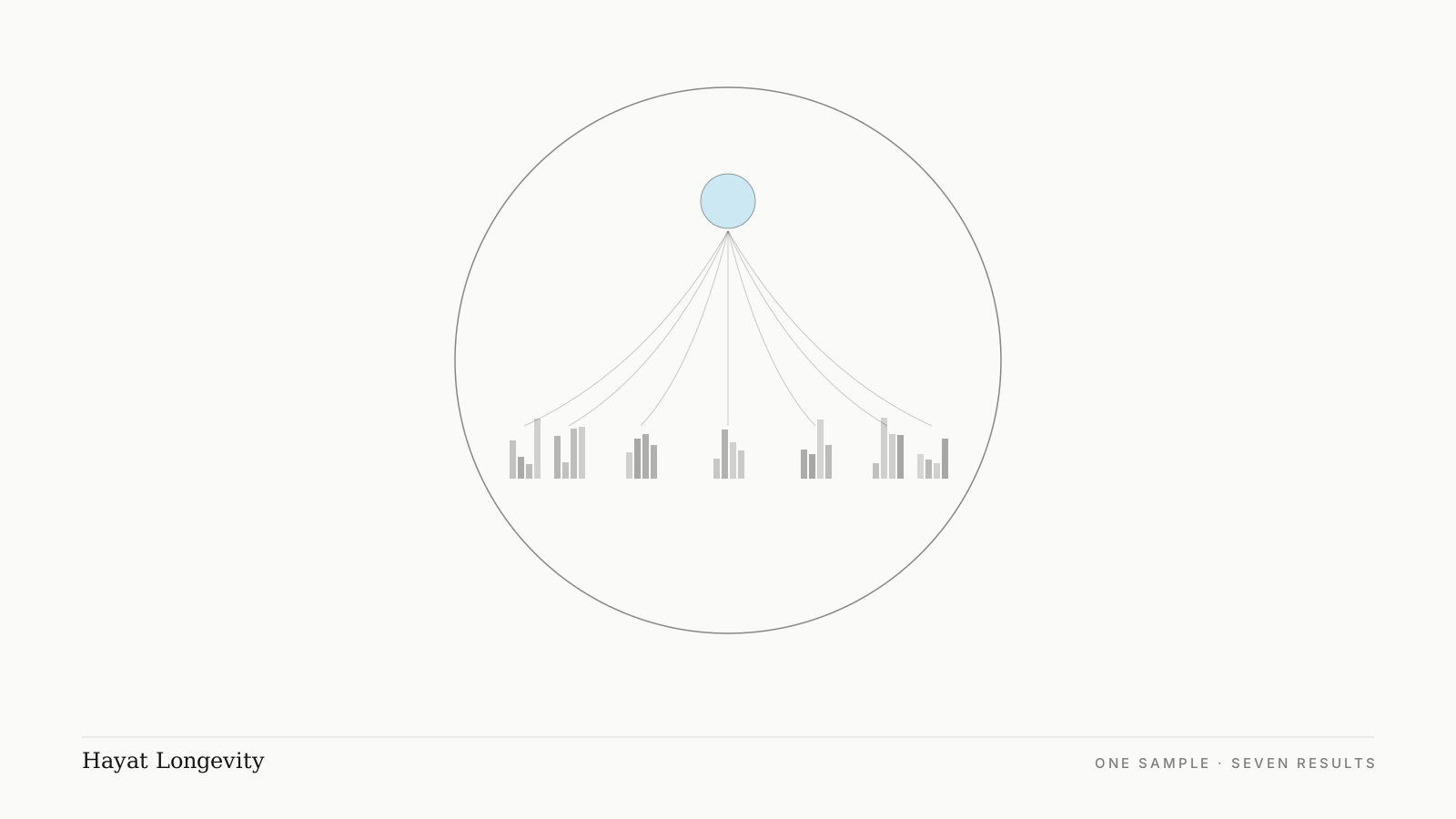
Seven consumer testing services were sent identical stool material in 2026. The differences between providers were as large as the differences between different people.
Patients arrive with these reports now. A colour-coded chart of bacterial families, a diversity score, a list of foods to eat and avoid, and usually a recommended supplement conveniently sold by the same company.
The underlying biology is not in question. The gut microbiome is genuinely involved in digestion, immune regulation, metabolism and the production of compounds that affect tissues far from the gut. That research is among the more interesting areas in medicine.
The question is narrower and more practical: can a commercial test of your microbiome tell you anything you can act on? In 2026 that question got a much clearer answer than it had before, and it is not the answer the reports imply.
Key takeaways
- Seven consumer testing services were given identical standardised stool material in 2026. Differences between providers were as large as differences between different people.
- The 2025 international consensus in Lancet Gastroenterology and Hepatology does not recommend routine microbiome testing in clinical practice.
- There is no agreed definition of a healthy microbiome, which means there is no reference range to score you against.
- Stool testing is well supported for four specific things, none of which is wellness optimisation.
- The consensus position is that testing, where done, belongs with a clinician rather than a laboratory selling supplements.
- The best-evidenced advice for gut health needs no test at all: dietary diversity, adequate fibre, regular activity, judicious antibiotic use.
The 2026 reliability study
This is the finding that should change how you read one of these reports.
Researchers took standardised human faecal material developed by the US National Institute of Standards and Technology, a reference material designed precisely so that different laboratories can be compared against a known quantity, and sent it to seven direct-to-consumer gut microbiome testing services.
The results, published in Communications Biology in 2026, showed major discrepancies both within and between providers. The sentence worth sitting with is this: the variability between providers was on the same scale as the biological variability between different donors.
In other words, the difference between two companies analysing the same sample was about as large as the difference between two different people's guts. The authors attributed this to methodological variability and insufficient quality control.
The practical implication is uncomfortable. If you had sent your sample to a different company, you would likely have received a materially different profile, and therefore different dietary advice and a different supplement recommendation, from the same biological material.
What the consensus says
In 2025, an international group published a consensus statement on microbiome testing in clinical practice in Lancet Gastroenterology and Hepatology. Its position was that evidence supporting clinical usefulness is scarce, and it does not recommend routine microbiome testing outside research.
It made two further points worth carrying.
Testing, where performed, should be done by licensed healthcare professionals, with therapeutic interpretation remaining the responsibility of the clinician rather than the testing laboratory. That is a direct comment on the direct-to-consumer model, in which the company that produces the number also sells the remedy.
There is no universal healthy reference standard. Inter-individual variation is enormous, and two healthy people can have substantially different microbial compositions. Without a reference range, a score telling you your microbiome is "72 out of 100" is describing a comparison that has not been established.
The French Society of Microbiology has advised against microbiome testing on similar grounds. There are currently no regulatory-approved clinical microbiome diagnostic tests.
Where stool testing genuinely earns its place
None of this means stool testing is useless. It means the well-supported uses are specific and clinical:
| Use | Status |
|---|---|
| Suspected C. difficile infection | Established |
| Infectious diarrhoea workup | Established |
| Inflammatory bowel disease monitoring, with validated biomarkers | Established |
| Colorectal cancer screening with FIT | Established, and genuinely important |
| Personalised nutrition, weight management, mood, cardiovascular risk, general optimisation | Not yet supported |
That last row is where nearly all the consumer market sits.
One area is moving faster than the rest. In oncology, there is an immediately actionable finding: antibiotics within thirty days of starting immune checkpoint inhibitor therapy, and mixed over-the-counter probiotics, both correlate with poorer immunotherapy outcomes. If you are undergoing immunotherapy, that is worth raising with your oncologist, and it is a rare example of microbiome science producing a clear clinical instruction today.
The honest bit
The biology is real and the testing is behind it. These two things get conflated constantly, usually by people selling the test. Believing the microbiome matters and doubting that a consumer panel can usefully measure yours are entirely compatible positions, and both are currently correct.
A report describing composition is not a report telling you what to do. Even a perfectly accurate profile runs into the reference-range problem: without knowing what a healthy microbiome looks like for someone with your genetics, diet and history, a composition is a description rather than a diagnosis.
The supplement recommendation is the part to be most sceptical of. When the company measuring you also sells the correction, the incentive is obvious. Note also that mixed over-the-counter probiotics are the specific product implicated in the immunotherapy finding above, which is a reminder that "probably harmless" is an assumption rather than a finding.
And we sell a programme in this area, which is why the declaration sits at the top of this article. Our position is that microbiome work belongs inside a clinical assessment with a clinician interpreting it, which is what the consensus recommends, and that it is not a first-line test for someone with no gut symptoms and no clinical indication. If your question is general wellness optimisation, the honest answer is that the evidence does not yet support testing for it.
What actually improves gut health
The most useful thing about this evidence base is that the best-supported advice requires no test whatsoever.
Dietary diversity. The number of different plant foods eaten across a week correlates with microbial diversity more reliably than any single food. Aim for variety rather than for a superfood.
Fibre, and specifically enough of it. Fermentable fibre is what gut bacteria actually consume, producing short-chain fatty acids that support the gut lining and appear to have systemic effects. Most Malaysian adults fall well short, largely through low vegetable intake.
Fermented foods. Yoghurt, tempeh, kimchi, and other live-culture foods. The evidence here is developing and reasonably encouraging, and tempeh in particular is local, inexpensive and excellent.
Regular physical activity, which is associated with greater microbial diversity independently of diet.
Judicious antibiotic use. Necessary when indicated and disruptive when not. This is the single most consequential thing most people do to their microbiome, and it is the one most often done casually.
And patience with the timeline. Composition shifts within days of a dietary change, but the durable pattern follows the durable diet. A fortnight of vegetables does not settle the question.
Where we would start instead
If you have genuine gut symptoms, the useful pathway is a clinical one: history, examination, and the established tests appropriate to what you describe, including coeliac serology, inflammatory markers, and colorectal screening where age or symptoms warrant it. Those are the tests with reference ranges and evidence behind them.
If you have no symptoms and the goal is general health, the fibre and diversity advice above is the intervention, and it is free. Our Grocery Picks series works through the supermarket aisle by aisle, and the oats and yoghurt episodes cover the fermentable fibre and live culture questions in detail.
If you want to know where you actually stand across the wider picture, the pre-consultation questionnaire covers your history and symptoms, which is what determines whether any of this warrants testing at all.
Frequently asked questions
Are gut microbiome tests accurate?
A 2026 study sent standardised reference stool material to seven direct-to-consumer testing services and found major discrepancies both within and between providers. The variability between companies was on the same scale as the biological variability between different people, which means the same sample could produce materially different profiles depending on which company analysed it.
Does the Lancet consensus recommend microbiome testing?
No. The 2025 international consensus statement in Lancet Gastroenterology and Hepatology found evidence supporting clinical usefulness to be scarce and does not recommend routine microbiome testing in clinical practice. It also states that where testing is performed, it should be done by licensed healthcare professionals with interpretation remaining the clinician's responsibility rather than the laboratory's.
Is there such a thing as a healthy microbiome?
Not in the sense of a defined reference range. Variation between healthy individuals is enormous, and no universal healthy standard has been established. This is the central obstacle to scoring someone's microbiome, because a score implies a comparison that does not currently exist.
When is stool testing genuinely useful?
Four situations are well supported: suspected C. difficile infection, infectious diarrhoea, monitoring inflammatory bowel disease with validated biomarkers, and colorectal cancer screening using FIT. That last one is genuinely important and often neglected. Personalised nutrition, weight management, mood and general wellness applications are not yet supported.
Should I take the supplements my microbiome report recommends?
Treat that recommendation with particular scepticism, since the company producing the measurement typically also sells the correction. It is also worth knowing that mixed over-the-counter probiotics have been associated with poorer outcomes in patients receiving immunotherapy, which shows that "probably harmless" is an assumption rather than an established finding.
What actually improves gut health without a test?
Dietary diversity, measured as the number of different plant foods across a week; adequate fermentable fibre, which is what gut bacteria consume; fermented foods such as yoghurt and tempeh; regular physical activity; and using antibiotics only when genuinely indicated. This is the best-evidenced advice available and none of it requires knowing your bacterial composition. Written by Dr. Daniel Chong, Human Performance and Longevity. AOKLINIK Penang. General information only and not individual medical advice. If you have persistent gut symptoms, unexplained weight loss, bleeding or a change in bowel habit, see a doctor rather than a testing service. Those symptoms need assessment, not a composition report.
References
- Evaluating the analytical performance of direct-to-consumer gut microbiome testing services. Communications Biology, 2026;9:269.
- Porcari S, et al. International consensus statement on microbiome testing in clinical practice. Lancet Gastroenterology and Hepatology, 2025;10(2):154-167.
- Hoffmann DE, et al. The DTC microbiome testing industry needs more regulation: tests lack analytical and clinical validity. Science, 2024;383(6688):1176-1179.
- Hoffmann DE, et al. Is the current regulatory framework for direct-to-consumer microbiome-based tests sufficient to protect consumers? Journal of Law and the Biosciences, 2025.