
We Built a Supplement Guide That Mostly Tells You to Take Less
Forty-one supplements graded by evidence, a six-step questionnaire that subtracts rather than adds, and label reading built for the Malaysian shelf.
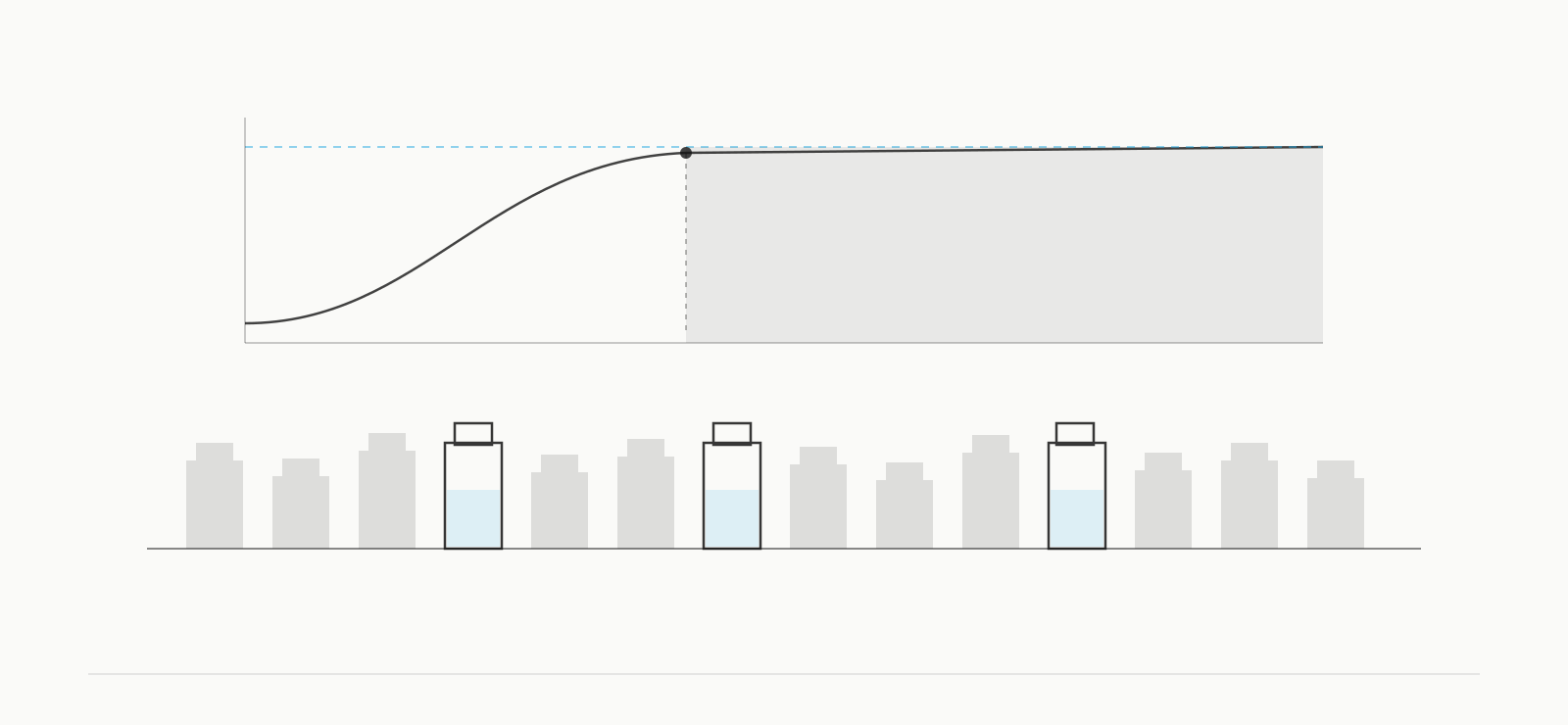
A patient came to see me some months ago with a printed list of the hallmarks of ageing and a carrier bag holding fourteen supplements. He had worked through the list methodically and bought something for each item on it.
It was diligent, it was expensive, and several more useful things in his health had gone unattended while he assembled it.
Key takeaways
- The Supplement Guide is free, needs no sign-up, and sends nothing anywhere. Forty-one supplements, each with a studied dose range, an upper limit, a sensible form and an evidence grade.
- One of the four grades is "not supported", which exists so that the entries telling you to buy nothing are as findable as the ones telling you to buy something.
- The questionnaire's fifth step asks about your medicines in order to move things off your list rather than onto it.
- "My stack" checks what you already take for duplicated nutrients, totals creeping toward an upper limit, and pairs that should be separated.
- Everything is built for the Malaysian shelf: NPRA registration numbers, halal certification, elemental weight, and fish oil that has spent its life in this heat.
I have thought about that bag a great deal since, because he had done nothing unreasonable. He had a question, he looked for an answer, and what the internet offered him was a series of articles each explaining why he needed one more thing. Nobody had ever told him to put something down.
So we built the tool I wanted to give him.
The Supplement Guide is free, it needs no sign-up, and nothing you enter is sent anywhere. Forty-one supplements graded by evidence, a questionnaire that works out which of them are irrelevant to you, and a checker for the combination you are already taking.
Why most supplement advice does not help
Three reasons, and they are structural rather than anybody being dishonest.
It is written for someone else. Most of what you will read is written for an American or European reader. That reader is not eating what you eat, is not getting the sunlight you are getting, is not looking at the shelf you are looking at, and does not need to check whether something is halal. Vitamin D advice built around a British winter is not advice about living in Penang.
It only ever adds. Every article arrives at a recommendation to take something, because an article that concludes "you are fine, buy nothing" is not an article anyone commissions. The cumulative effect of reading twenty of them is a bag with fourteen bottles in it.
It ignores what you are already on. The most important thing about a supplement is frequently not what it does, but what it does alongside your medication, your other supplements, and your kidneys. Almost nothing written for the public asks.
What the tool actually does
Six steps. It takes a few minutes.
It asks about you first. Age band and sex at birth, because requirements differ, and plenty of popular recommendations are relevant to one group and not another.
It asks how you eat. Your eating pattern, how often you have oily fish, whether you get calcium from dairy or tofu or small bony fish, how your vegetables and wholegrains look, and whether you need halal options or have a shellfish allergy. This matters more than anything else on the page. Most supplements are worth considering only where the diet is not already providing the thing, and for a lot of people it is.
It asks about sunlight and movement. Time outdoors, resistance training, heavy sweating. We live in a country with year-round sun and a population that spends most of it indoors and air-conditioned, which produces a situation people find surprising.
It asks what you want to work on. Energy, sleep, bone and joints, memory, gut, immunity, weight, stress, eye comfort. This narrows the field rather than opening it.
Then it asks what to be careful about, and this is the step that matters most. Blood thinners, thyroid medicine, long-term antacids, cholesterol medication, other cardiovascular medicines, smoking or vaping, daily drinking, kidney or liver conditions, and any multivitamin you are already on.
That step exists to take things off your list. Anything that interacts with what you have told us is pulled out of the recommended columns and moved into a separate one headed "discuss before starting", with the reason attached. It is the only part of the tool whose job is subtraction, and for most people it does more work than all the other steps combined. A supplement that is perfectly reasonable for one person is a poor idea for someone on a blood thinner, and that distinction is almost never made on a product label.
Four grades, and one of them is "not supported"
Every entry in the library carries the studied dose range, the upper limit, a sensible form, and an evidence grade: well established, reasonable, limited, or not supported.
The fourth grade is the one I would point you to first.
Something has to be in the library to be looked up, which means a fair number of entries exist specifically to tell you the evidence is not there. That is deliberate. A guide that only lists things worth taking leaves you to guess about everything it left out, and guessing is how the bag fills up.
You will find things in the "not supported" column that are sold aggressively in Malaysia and that you may already own. I would rather you found that out from a free page than from a year of direct debits.
The parts built specifically for Malaysia
This is where the tool does something no international guide does.
Reading a Malaysian label. How to check the NPRA registration number, the difference between elemental weight and salt weight, which is where a product claiming a big number often delivers a much smaller one, what a proprietary blend is hiding, what third-party testing means, how to check halal certification rather than trusting a halal-sounding brand name, and how to tell whether a fish oil is fresh.
That last one is not trivial in this climate. Heat and time are what spoil fish oil, and we have plenty of both.
Forms and timing. Which form of a given nutrient is generally the sensible one, and what should be taken together or kept apart. Several common combinations compete for absorption, so people take the right things and get less of them than they paid for.
Dose and upper limits. Why taking more of something frequently achieves nothing, because absorption is capped, and where the actual tolerable upper limits sit. There are supplements where exceeding the limit is genuinely harmful rather than merely wasteful, and the tool says which.
"My stack": the part to use even if you read nothing else
If you are already taking things, go here first.
Enter what you take and it checks the combination for duplicated nutrients, which is common once you are on a multivitamin plus anything else, for totals approaching an upper limit, which is how people get into trouble without ever exceeding a dose on a single label, and for pairs that should be separated or avoided together.
Most people who run their existing combination through this find something. Usually a duplication they had not noticed. Sometimes a timing problem that was quietly reducing the benefit of something they were paying for.
Your list is kept in your own browser so that it is still there next time, and it is never transmitted to us or to anyone else. There is a button to print it or save it as a PDF, which is the version worth bringing to an appointment.
Measure first, then decide
There is a short section on tests, and it reflects how I practise.
For several of the most commonly taken supplements, there is a test that tells you whether you need it. Vitamin D. Ferritin, with a full blood count, for iron stores. B12 with folate. A lipid panel including ApoB.
Supplementing without measuring means you do not know whether you are correcting a deficiency, which is worth doing, or topping up something already adequate, which is not. And if you never measure afterwards either, you have no way of knowing whether it changed anything.
This is the single habit that would most change how people spend money on supplements.
The budget order
The guide ends with something I have not seen elsewhere: a ranked order for spending.
Most people have a finite amount they will spend on their health each month, and supplements compete with things that would do more. The ranking makes that trade-off visible, and it puts supplements where they honestly belong, which is below sleep, food and training, and alongside the occasional test that would tell you something.
There is also a list of marketing red flags. If you read nothing else before your next purchase, read that.
How to actually use it
Four moments where it earns its keep.
Before you buy anything. Run the questionnaire. It takes a few minutes and it will frequently tell you that the thing you were about to buy is not indicated for you.
When somebody recommends something to you. A friend, a trainer, a shop assistant, an advertisement. Look it up in the library and read the grade. This is the fastest use of the tool and the most valuable.
To audit what you already take. Put your current combination into "My stack". If you have not done this, you do not know whether you are doubling up.
Before a consultation. Print what the tool gives you and bring it. It means we start the conversation from something real rather than from you trying to remember the names of six bottles.
What it is not
It is general nutritional information, not individual medical advice, and that distinction is real rather than a legal formality.
It does not know your medical history, your blood results, or anything a doctor would find on examination. It cannot account for pregnancy or breastfeeding, for a condition it did not ask about, or for the specific interaction between a particular medicine and a particular product at a particular dose.
If you are pregnant or breastfeeding, under medical care, or taking prescribed medicine, use the tool to prepare for a conversation rather than to replace one. Your doctor or pharmacist should see your list.
And it will not tell you that supplements are the answer, because for most people most of the time they are not. The things that move the needle are unglamorous and mostly free.
Where the numbers come from
Every dose range, upper limit and evidence grade in the guide is attached to a source, and each library entry lists the specific references that apply to it so you can read them yourself.
The upper limits follow the European Food Safety Authority's tolerable upper intake levels and, for vitamin D and calcium, the US Institute of Medicine reference intakes. The nutrient-specific grades draw on the primary literature: the American Heart Association's advisory on omega-3 dosing, the International Society of Sports Nutrition position stand on creatine, the PROT-AGE group's protein recommendations for older adults, the Cochrane review of vitamin C and the common cold, Hemila's meta-analysis of zinc lozenges, the Lancet Haematology trials that established alternate-day iron dosing, the psyllium and LDL meta-analysis in the American Journal of Clinical Nutrition, and the meta-analysis that found a mortality signal with high-dose vitamin E.
Those last two are worth noting together, because they show the range. Psyllium is cheap, unglamorous and works. High-dose vitamin E was the antioxidant everybody was certain about until it was tested properly. A guide that only cited the encouraging results would not be much use to you.
The regulatory side points at the National Pharmaceutical Regulatory Agency and the Ministry of Health product register, which is where you check a MAL number rather than taking a seller's word for it.
Written by Dr. Daniel Chong, Human Performance and Longevity. AOKLINIK Penang.
General information only and not individual medical advice. Anyone pregnant, breastfeeding, under medical care or taking prescribed medicines should speak with a doctor or pharmacist before starting or stopping a supplement. Individual requirements vary and no outcome can be guaranteed.
Frequently asked questions
Is the Supplement Guide free, and do I have to register?
Free, with no sign-up. Your questionnaire answers are not stored at all, and the stack list you build is kept in your own browser so that it is there next time. Nothing is transmitted to us or to anyone else.
How many supplements does it cover?
Forty-one, each with a studied dose range, a tolerable upper limit, a suggested form, timing guidance, cautions and an evidence grade, plus a note on what is specific to Malaysia.
Will it tell me what to take?
It will narrow the field to what is plausibly relevant for you and remove what is not, with the evidence grade and a reason attached to each. Deciding what to take, particularly alongside medication, is a conversation with a clinician.
I only take a multivitamin. Is this worth my time?
Particularly worth it. Multivitamins are the commonest source of accidental duplication once anything else is added, and people rarely check what is already in theirs. The stack checker adds the two together and shows you where the total lands against the upper limit.
Does it cover brands?
No, and deliberately. It covers ingredients, doses, forms and how to read a label, so that you can assess any brand in front of you rather than relying on us to have reviewed it.
Is higher strength better?
Almost never, and this is the most expensive assumption people make. Some nutrients fill a tank and then plateau, so the extra does nothing. Some have a window with harm at both ends. A few genuinely respond to dose until your tolerance stops you. The guide explains which shape applies to each one, and separates the absorption ceiling from the tolerable upper limit, because they are different things and both matter.
Can I use it if I am not a patient?
Yes. It is a free public resource and there is no expectation that you book anything.
References
- EFSA Scientific Committee on Food and Panel on Dietetic Products, Nutrition and Allergies. Tolerable Upper Intake Levels for Vitamins and Minerals. European Food Safety Authority, 2006; summary report updated 2024.
- Institute of Medicine. Dietary Reference Intakes for Calcium and Vitamin D. National Academies Press, 2011.
- Skulas-Ray AC, et al. Omega-3 Fatty Acids for the Management of Hypertriglyceridemia: A Science Advisory From the American Heart Association. Circulation, 2019.
- Kreider RB, et al. International Society of Sports Nutrition position stand: safety and efficacy of creatine supplementation in exercise, sport, and medicine. Journal of the International Society of Sports Nutrition, 2017;14:18.
- Bauer J, et al. Evidence-based recommendations for optimal dietary protein intake in older people: a position paper from the PROT-AGE Study Group. Journal of the American Medical Directors Association, 2013;14(8):542-559.
- Hemila H, Chalker E. Vitamin C for preventing and treating the common cold. Cochrane Database of Systematic Reviews, CD000980.
- Hemila H. Zinc lozenges and the common cold: a meta-analysis comparing zinc acetate and zinc gluconate, and the role of zinc dosage. JRSM Open, 2017.
- Stoffel NU, et al. Iron absorption from oral iron supplements given on consecutive versus alternate days and as single morning doses versus twice-daily split dosing in iron-depleted women: two open-label, randomised controlled trials. The Lancet Haematology, 2017;4(11):e524-e533.
- Jovanovski E, et al. Effect of psyllium (Plantago ovata) fiber on LDL cholesterol and alternative lipid targets, non-HDL cholesterol and apolipoprotein B: a systematic review and meta-analysis of randomized controlled trials. American Journal of Clinical Nutrition, 2018.
- Miller ER 3rd, et al. Meta-analysis: high-dosage vitamin E supplementation may increase all-cause mortality. Annals of Internal Medicine, 2005;142(1):37-46.
- National Pharmaceutical Regulatory Agency, Malaysia. Health supplement registration and the MAL number.
- Ministry of Health Malaysia. Product registration search, for checking a MAL number against the register.